Category: Post

  • JS1K


    m="left|width|height|top|background|color|position".split('|');q=Math.random;A=
    120;d=(r=document)[N='createElement']('textarea');k=r[N]('a');k[D='style'][m[6]
    ]=U='absolute';n={6:U,0:0,3:0,1:z='300px',2:z,4:T='transparent',5:T};for(x in n
    )c[D][m[x]]=d[D][m[x]]=n[x];k[D][m[0]]=(c[m[1]]=c[m[2]]=v=parseInt(z))+14+'px';
    b[C='appendChild'](d);b[C](k);e=c.getContext('2d');s=[];L='length';d.onkeyup=f=
    function(k){c[m[1]]=v;e.font=d[D].font='14px arial';n=d.value.split('\n');l=0;
    for(x in n)e.fillText(n[x],3,l+=F=14);l=e.getImageData(0,0,v,v),o=l.data;for(i=
    0;O=s[i],i<s[L];i++){o[O[0]]==0&&(s[i]=[0]);for(j=0;j<O[L];j+=2){r=q();o[O[j]-2
    ]=O[j+1]+F*r+A;o[O[j]]=2*A;if(O[L]>F)continue;r<.05&&s[i].push(O[j]+A*10,A*r)||
    r<.1&&s[i].push(O[j]+4,A*r)}}for(i=0;!k&&i<o[L];i+=4)if(o[i+3]!=0&&q()<1/s[L])s
    .push([i+3,A]);s=s.filter(function(n){return n[L]>1});e.putImageData(l,0,0)};g=
    "lufituaeB = erutaN = modnaR".split('');setInterval("n=g.length&&(d.value+=g.
    pop());f(f(n))",v);k.innerText="Add your own Text and let the Moss take over"

    See it Here

  • Calendar

    It’s going to be a busy spring this year.

    Mar 24. Skiing at Whistler, SOSP deadline
    Mar 31. NSDI, Chicago.
    Apr 7. New Quarter TAing Distributed Systems
    May 12. Of Montreal, Google IO

  • White Label Google Forms

    Google Forms are a reasonable option for conducting quick surveys without having to manage your own server. Sometimes, though, you want a bit more control over the user experience than what is provided by the template.

    Google App Script lets you do this, the following script dumps provided variables into a spreadsheet, just like a Form would do:

    function doGet(request) {
      var result = {
        success: true
      };
    
      if (request && request.parameter && request.parameter.[name]) {
        var dataSS = SpreadsheetApp.openById("[spreadsheet id]");
        var sheet = dataSS.getActiveSheet();
        sheet.appendRow([
          Utilities.formatDate(new Date(), "GMT", "yyyy-MM-dd'T'HH:mm:ss'Z'"),
          request.parameter.[name]
        ]);
      } else {
        result.success = false;
      }
      
      return ContentService.createTextOutput(
          'callback(' + JSON.stringify(result) + ')')
          .setMimeType(ContentService.MimeType.JSON);
    }
    
  • Thinking about Internet Privacy

    Made a quick survey for my HCI class this quarter to look at how people think about their privacy online.

    net

  • Provider Change

    I switched this blog’s hosting provider from dreamhost to digital ocean over the last couple days. Some features may still be glitchy for a bit longer as I finish the migration.

    digitalocean

    The benefit is that I now am on a private VM, which allows features like SSL, so https://wills.co.tt/ is now active.

  • Aaron made the world a better place.

  • Network Visualization

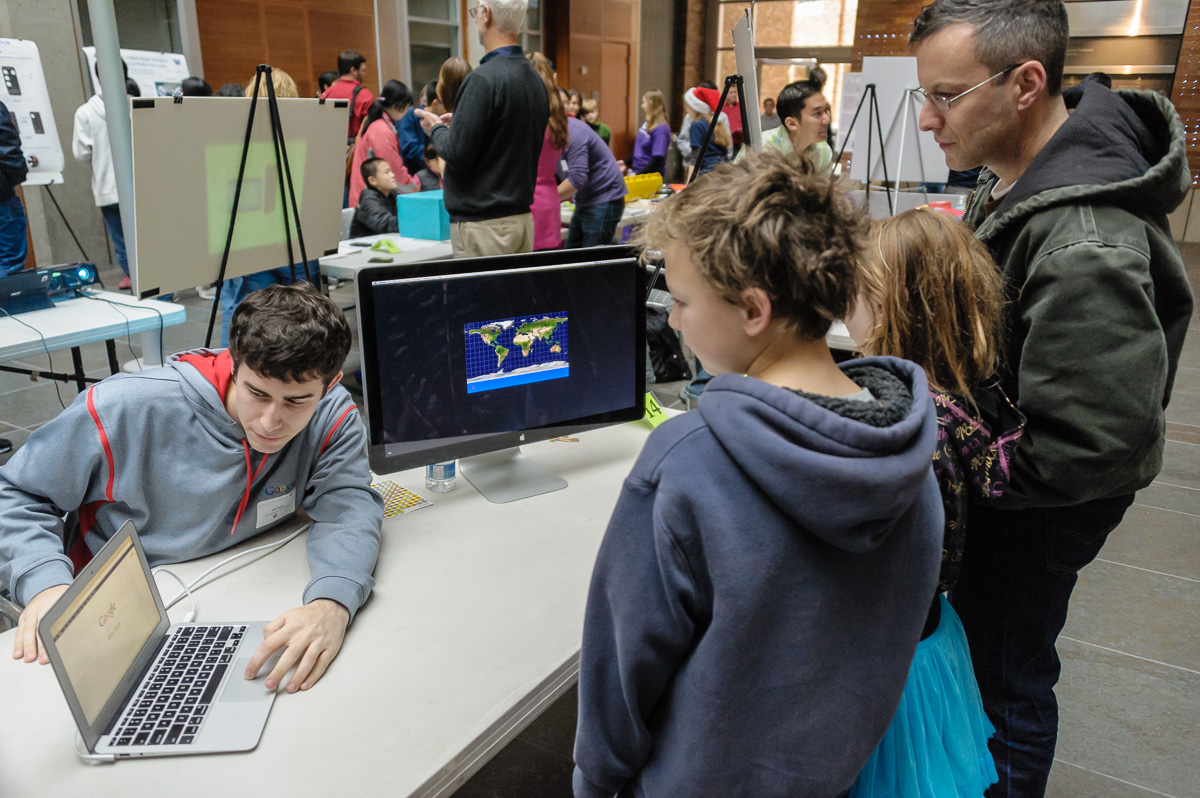
    I presented CalmNetViz to a bunch of students this afternoon at DawgBytes.

  • Chrome Proxy


    Proxxy had its best installation day ever yesterday. I have no clue why. Usage is at about 2500 users, up from 1500 this summer.

  • Quals Talk

    Will Scott
    
    Qualifying Evaluation Project Presentation
    
    "Block-Resistant Network Services Using Unblock"
    
    Thursday, November 1, 2012
    
    10:00 a.m.
    
    Allen Center, CSE 203
    
    Advisors:  Tom Anderson and Arvind Krishnamurthy
    
    ABSTRACT--
    
    The desire for uncensored access to the Internet has motivated the
    development of both open proxies like Tor and social graph-based overlays
    like FreeNet. However, neither design is sufficient, since open access
    networks are easily exposed and blocked, and overlays based just on social
    trust suffer from poor availability and performance. This talk presents
    the design for a new overlay service, Unblock, constructed from an
    augmented social graph. In Unblock, multi-hop paths through social links
    protect individual participants from exposure to adversaries. Unblock
    achieves good performance by introducing additional links in the network
    graph in a manner that minimizes vulnerability. We also develop several
    transport level techniques for improved latency and demonstrate the
    practicality of the system for web traffic workloads.